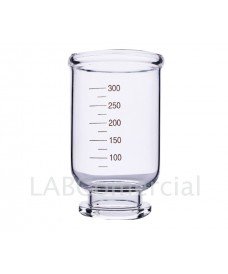
Base with filter plate for membrane filters with a diameter of 47 mm.
The body is made of borosilicate glass and the filter plate is made of crushed glass. Piece for filter channels, filter equipment and filter holders.
The diameter of the filtering plate is 40 mm and is used in glass containers with a non-frosted glass neck piece.
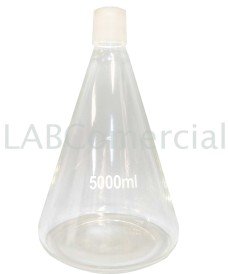
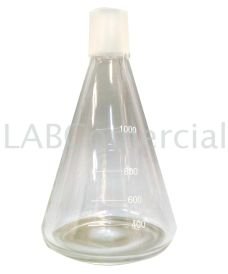
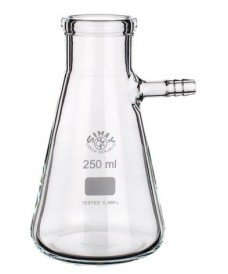
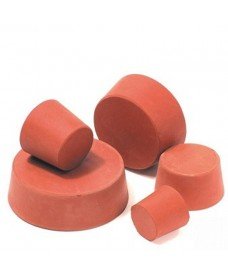
The reference does not include the hole plug. Please contact us to specify the inside and top diameter of the conical vacuum flask (no ground glass) or the container in which it will be placed.
Base with filter plate for membrane filters with a diameter of 47 mm.
The body is made of borosilicate glass and the filter plate is made of crushed glass. Piece for filter channels, filter equipment and filter holders.
The diameter of the filtering plate is 40 mm and is used in glass containers with a non-frosted glass neck piece.
The reference does not include the hole plug. Please contact us to specify the inside and top diameter of the conical vacuum flask (no ground glass) or the container in which it will be placed.
A glass base with a filter plate for 47 mm membrane filters is a device used in laboratories for liquid filtration. The filter plate, typically made of fritted glass, serves as a support and evenly distributes the liquid over the 47 mm diameter membrane filter. This system enables the retention of particles, microorganisms, and other contaminants present in the liquid, ensuring precise and effective filtration. It is commonly used in microbiological analysis, quality control, and sample preparation for advanced analytical techniques, ensuring that samples are free of impurities and suitable for subsequent analysis. The glass construction ensures chemical and thermal resistance, facilitating the cleaning and reuse of the device.
Microbiological Analysis:
— Water Filtration: Used to detect and quantify microorganisms in potable water, wastewater, and other water samples.
— Microorganism Cultivation: After filtration, the membranes can be incubated in culture media for the enumeration of bacterial colonies and other microorganisms.
Quality Control:
— Food and Pharmaceutical Industries: Liquid samples are filtered to ensure the absence of microbiological contaminants or unwanted particles.
— Beverage Production: The microbiological quality of water used in beverage manufacturing is analysed.
Sample Preparation:
— Mass Spectrometry and HPLC: Solutions are filtered to remove particles that could obstruct the equipment or interfere with the analyses.
System Assembly: Place the glass base with the filter plate on a suitable stand. Secure a 47 mm membrane filter onto the filter plate.
Sample Preparation: Pour the liquid sample into the funnel placed over the membrane filter. Connect the system to a vacuum source to facilitate the passage of liquid through the membrane.
Filtration: Turn on the vacuum pump to start the filtration. The liquid will pass through the membrane filter, leaving particles and microorganisms retained on the membrane surface.
Post-Filtration: Remove the membrane filter for subsequent analysis (e.g., incubation in culture media for microbiological analysis). Clean the glass base and filter plate for reuse.
— Before Critical Analyses: Used to prepare samples that must be free from contaminants and particles that could affect analytical results.
— During Environmental Monitoring: In water quality analysis to ensure compliance with health and safety standards.
— In Industrial Quality Control Processes: To ensure products and their components are free from undesirable contaminants, meeting the required specifications.
Chemical and Thermal Resistance: Glass is inert and does not react with most chemicals, and it can withstand high temperatures, making sterilisation easy.
Reusability: Easy to clean and sterilise for repeated use, making them cost-effective in the long run.
Efficiency and Precision: Allow for even liquid distribution and effective filtration, crucial for obtaining accurate and reliable results.In summary, glass bases with filter plates for 47 mm membrane filters are essential tools in the laboratory for the precise and reliable filtration of liquids, employed in a variety of scientific and industrial applications.